
Ohio City Directory Holdings
| Collection | Years | Where Held | Access |
|---|---|---|---|
| Ohio OGS city and street directory inventory | Akron, Ohio: 1926-27, 1933, 1934-35, 1937, 1938-39, 1943, 1950, 1954-55 through 2006, with gaps; Ashland, Ohio: 1900, 1911, 1919, 1921, 1929-31, plus later runs | Ohio Genealogical Society Library | Check the inventory, then confirm call number and visitor access |
| Gale Springfield, Ohio, directory microfilm catalog | Springfield, Ohio: 1852; 1859/60; 1890/91-1931, with gaps | Gale catalog; reels at Ohio holding libraries | Ask a library about reel access |
| Ohio History Connection local farm and business directories | Seneca County, Ohio, 1948-49-50; Tuscarawas County, Ohio, 1949-50-51 | Ohio bibliography and research collections | Search the catalog or ask the State Archives |
| Ohio public library local-history shelves | City-specific; exact Toledo runs need catalog or staff confirmation | Ohio city and county libraries, including Toledo Lucas County Public Library | Catalog, reader room, staff lookup, or digital collection |
| FamilySearch Ohio collections | Collection by collection; no single directory date span | FamilySearch catalog and affiliated libraries | Check image and account restrictions for each collection |
| Ohio federal census schedules | Ohio decennial schedules; 1950 is public | National Archives, Ohio libraries, and genealogy collections | Search by place and enumeration area; access varies by schedule |
Ohio does not have one statewide city-directory database or a single complete run. The useful starting point is a catalog that names a specific Ohio city and years, followed by a check with the repository that holds the volume. The Ohio Genealogical Society (OGS) inventory lists scattered Akron editions from 1926-27 through 2006, with gaps, and Ashland editions in 1900, 1911, 1919, 1921, and 1929-31, followed by later runs. Those entries describe holdings, not a promise that each year survives or can be viewed online.
Gale also lists Springfield, Ohio, in 1852 and 1859/60, then 1890/91-1931 with gaps. A missing year may mean no edition was issued, the repository does not hold it, or the catalog is incomplete. OGS entries do not imply annual publication or complete runs. Check the edition, city limits, and repository before treating an Ohio range as continuous.
Ohio Directory Years Have Gaps
The Ohio OGS list shows a broken Akron run through 2006 and Ashland examples from 1900 through later volumes. A gap may mean an edition was not issued, the library does not hold it, or the catalog is incomplete. The inventory cannot distinguish these cases on its own.
The Ohio OGS inventory separates street, suburban, and city series. Search a place and year, note the series label, then ask about its call number, onsite access, and staff lookup rules. For another Ohio town, try county, farm, and business-directory terms too.
The Toledo Lucas County Library’s digital collection catalog shows how a local Ohio collection can group Directories alongside maps, newspapers, and regional records.
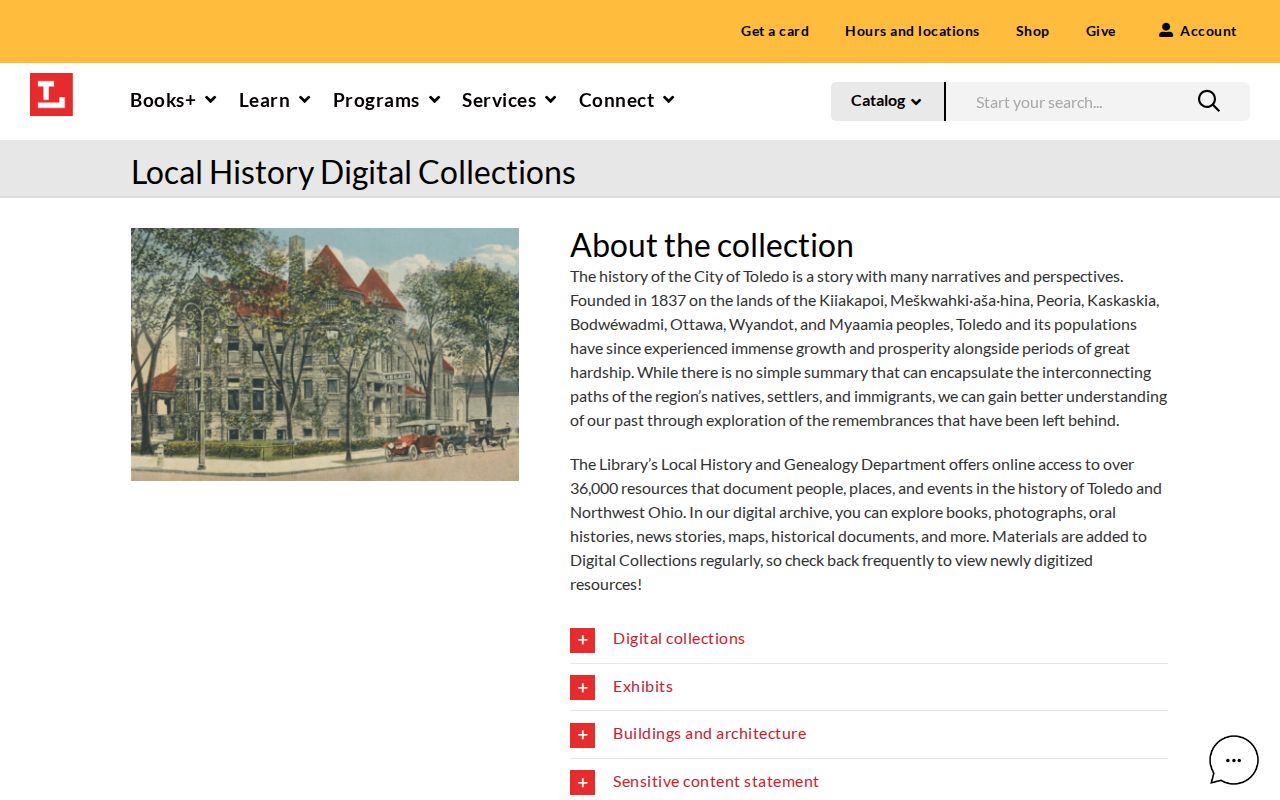
That Toledo example is a useful route for Ohio researchers into one regional collection, not evidence that all Ohio directory years have been scanned.
Read an Ohio Directory Entry
Ohio directories were made by different publishers and for different places, so read the volume’s own key before turning an abbreviation into a fact. An alphabetical listing may center on one householder; it can omit a spouse, child, lodger, or other person at the same address. Later editions may add a telephone number. A separate street section or classified business list can use a different order and different labels. Preserve what the book prints before you compare it with another Ohio record.
| Headword and name | Surname, given name, or initials; retain the printed form and any suffix |
|---|---|
| Occupation or role | Occupation, employer, or business role when the edition lists it |
| Street line | House number and street; note apartment, room, rear, or boarding marks |
| Household clue | Spouse or family clue may appear; h, wid, r, and bds meanings depend on the volume key |
| Later fields | Some later Ohio volumes add telephone details or separate street and business sections |
| Page context | Edition, publisher, page, city boundary, and canvass note help explain the entry |
- Criss-cross directory
- A reverse section arranged by street and number, sometimes linking an address to a listed occupant.
- Householder index
- An alphabetical list centered on a named household head; it may not name every person who lived at that place.
- Abbreviation key
- The publisher’s list of shortened terms and marks. Check it in that same Ohio volume before expanding a mark.
- Canvassed
- A note about how names were gathered. A canvass does not prove that every home or person was included.
The research confirms no statewide owner-or-renter symbol for Ohio editions. Do not infer property ownership or tenancy from a letter until the volume’s key explains it. A directory address can be a home, boarding place, business, or a listing reached during canvassing. The Ohio edition records what its publisher chose to print.
Toledo Ohio Directory Help
Toledo-Lucas County Public Library is a well-documented Ohio example of local-history access. Its Local History and Genealogy service offers house-history, newspaper, yearbook, obituary, and physical and digital collections. Ask about a one-to-one appointment or staff lookup for a fragile Ohio volume. Toledo’s catalog and reader rules apply there; each library sets its own policy.
The Toledo Local History and Genealogy service page lists Local.History@toledolibrary.org and 419-259-5233. Ask whether a particular Ohio volume is held, reference-only, and open to staff lookup or scanning. Rare materials require an appointment and reader rules: show photo ID, use pencil, and keep books in the room.
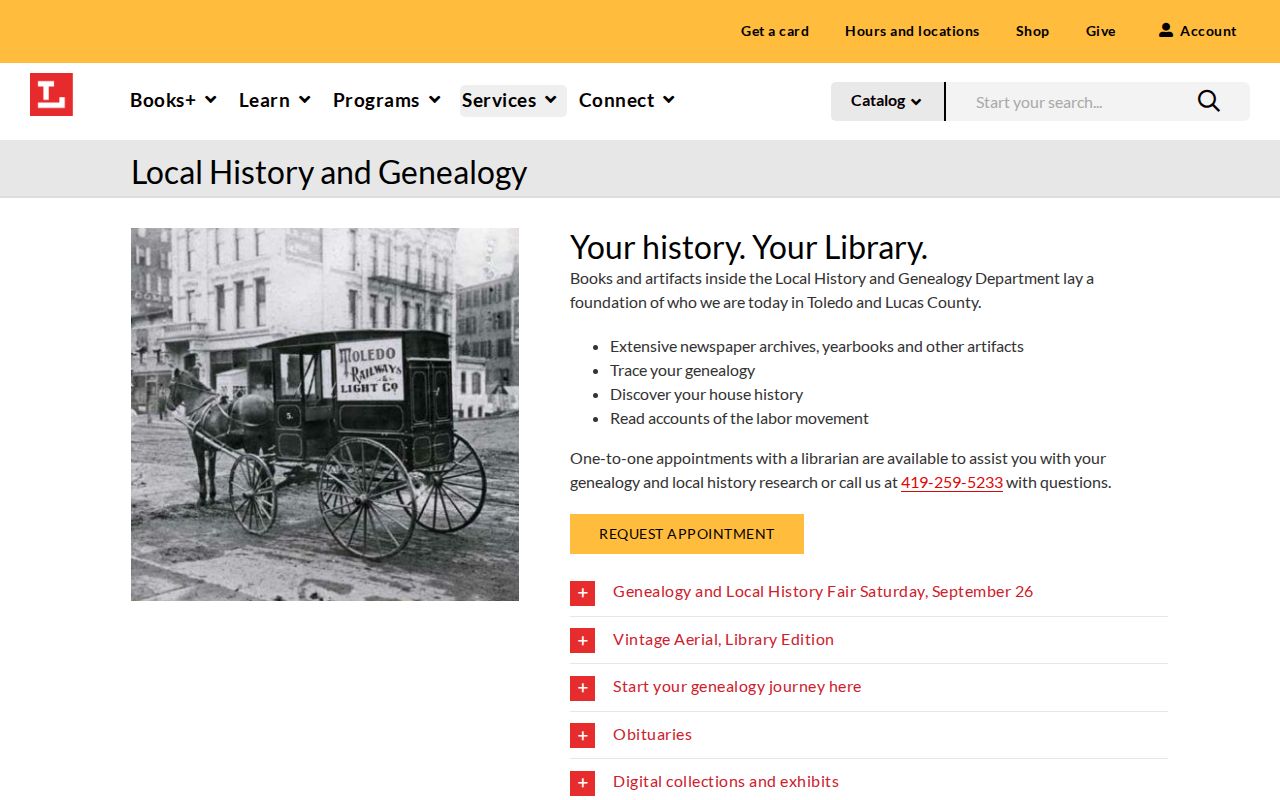
Ohio citations still need the printed edition and page, even when a staff lookup points to the shelf.
Ohio Digitized Directory Access
The Toledo Lucas County digital archive reports more than 36,000 resources for Toledo and Northwest Ohio. Categories include Directories, maps, newspapers, cemetery records, historical documents, schools, photographs, and regional books. Each Ohio category has its own dates and search limits; an online heading does not mean every volume is scanned or indexed by name. Ohio local-history collections differ in what they digitize.
Toledo’s Local History and Genealogy department sits on the third floor of the Main Library at 325 Michigan Street, Toledo, Ohio 43604. The library offers 25 free quarterly scans for eligible unbound items under 8.5 by 11 inches. Other digitization requests need an appointment and have an approximate four-week minimum turnaround. Confirm Ohio access rules with staff before a visit.
The Main Library location page gives the Toledo Ohio service location.
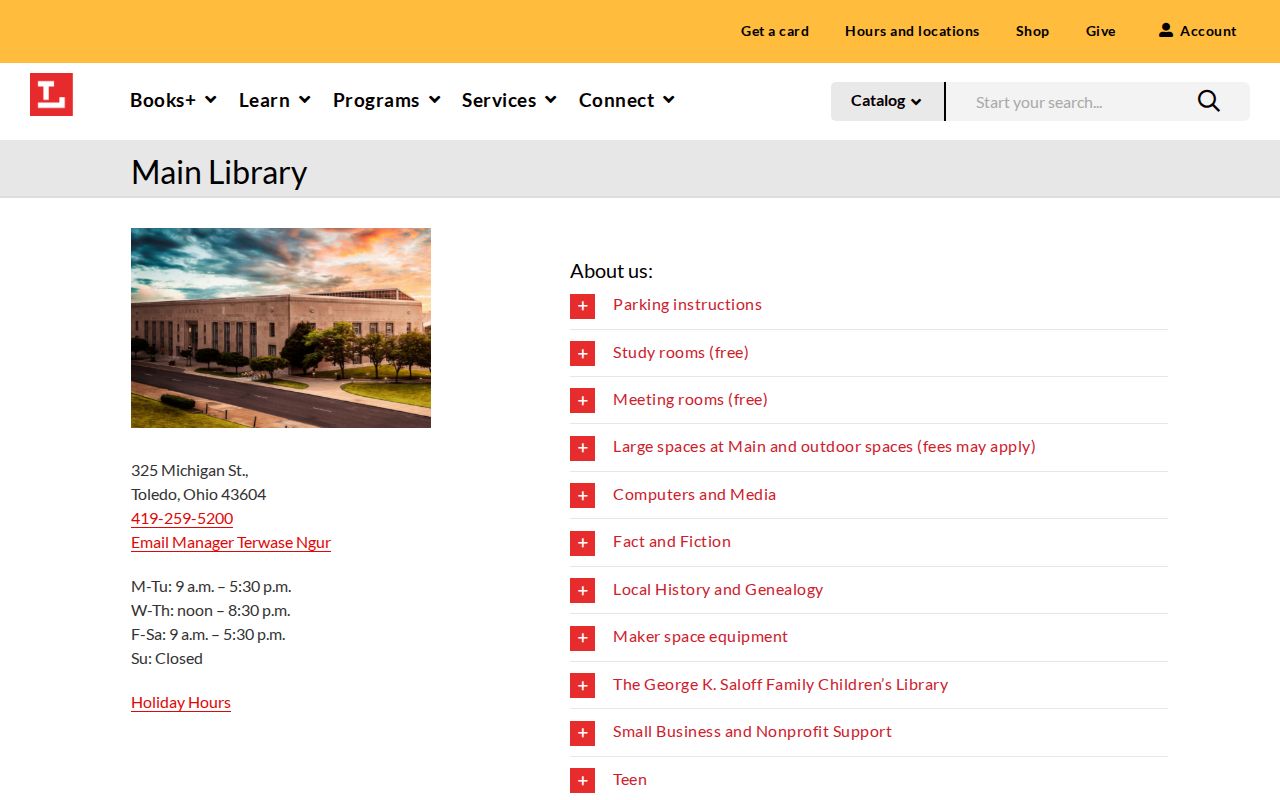
This Toledo research room is one local example; other Ohio libraries set their own access rules.
Ohio Reverse Directory Clues
A reverse or criss-cross directory starts with an address and works toward a name. Ohio libraries may catalog one as a street, reverse, or criss-cross directory. Ohio catalogs may use more than one label for the same format. OGS identifies some separate street and suburban runs, so search by format as well as by town. A reverse list may show a prior number, business use, vacancy, or occupant, but it may not tell who owned the property.
For an Ohio house history, copy the exact street line and number, then try common variants. Check whether the book covers a central district or suburb. A street section can reveal number changes; compare an old number with a period map. When ownership is the question, the Ohio previous residents trail follows deeds alongside directory names.
Ohio Household Names Across Editions
Ohio city directories can bridge the years between federal census snapshots, but the two sources describe different dates and use different boundaries. Record the directory’s title page and page number first. Then compare the printed address with the closest census schedule, deed, newspaper, or obituary. For Ohio towns with gaps, keep a timeline of what you checked instead of joining distant editions as if each intervening year were known.
- Choose an Ohio place and a known event year, then find the nearest available directory edition.
- Copy the full name, occupation, address, volume title, page, and publisher wording without normalizing the source.
- Search the same Ohio edition’s street section, then repeat the name search in the next available year.
- Compare the address and household clues with the nearest public census schedule and its enumeration area.
- Check deeds, newspapers, permits, obituaries, or probate for the date that best explains a move or name change.
- Mark missing Ohio editions as gaps, and search nearby towns or a county farm directory if the person drops out.
The National Archives identifies the 1950 federal census as public; later schedules follow the federal release schedule. An Ohio census match is a snapshot at enumeration, not proof that the household stayed there through the rest of a directory year. If a name disappears, check spelling, initials, a spouse, boarding notation, a nearby Ohio city, and obituary or probate sources before deciding what happened. A census gives family context that one volume may omit; a directory can add address and occupation detail between census dates.
Ohio Directory History by Era
Ohio record history spans local books, printed lists, microfilm, and newer online catalogs. Statehood in 1803 does not set a common first year for every county record. County organization and the earliest surviving deed, probate, or directory book differ from place to place. The date a source was printed, the date it was indexed, and the date a scan appeared online are separate facts.
- After Ohio statehood in 1803, county creation and local recordkeeping developed at different times; identify the historic county for the place being searched.
- Nineteenth-century Ohio directories, census schedules, newspapers, and deed books offer distinct views of names, addresses, and households.
- In the 1900s, libraries and repositories added microfilm and computer indexes, each with its own holdings and gaps.
- Modern Ohio portals and digital collections cover selected records; no statewide directory scan or common digitization date was found.
The Ohio History Connection’s Local Government Records Program explains retention and archival context for local government records. For directories, ask the library or archive whether a catalog entry refers to a book, microfilm reel, scan, or finding aid. That distinction can explain why an Ohio title appears in a search result but has no page images online.
Ohio City Directory Limits
A printed list is evidence of a publisher’s entry, not a legal finding of residence. Ohio city boundaries grew or changed, postal city names may differ from older labels, and street numbers can be revised. A listed person could have been at a business or boarding address; a family member may be absent because the volume names a household head. Compare Ohio directory entries with the map and source date that fit the question.
When a web search finds no Ohio entry, check the library catalog, ask local-history staff, and search the OGS and Gale inventories for an alternate title or format. A local historical society, university collection, or Ohio History Connection finding aid may hold a rural or business directory. A written request under Ohio’s public-records framework is for government records, not a way to compel a library to create a new directory index. Ask each repository about reproduction rights and access rules before requesting a scan.
Use the printed list to build a careful lead, then verify a key date or property claim in the record series that created it. That habit keeps an Ohio name from being mistaken for proof about a whole household or a current address.