
Ohio Resident Records at a Glance
Ohio has no statewide resident index. Start with the question: voter status, court activity, or a vital event. County courts and Probate systems are separate across Ohio, while selected searches come from state agencies. Read each result for its date and stated role. A tax owner, voter, licensee, party, and occupant are distinct labels.
| Record | What It Confirms | Where | Access |
|---|---|---|---|
| Ohio voter lookup | Registration, county, precinct, and visible public fields | Ohio Voter Lookup | Individual web search; protected fields excluded |
| Local court docket | Ohio case role, dates, filings, and status shown by that court | Ohio municipal, county, common pleas, or Probate clerk | Local portal, terminal, counter, or request |
| Supreme Court docket | Activity in a Supreme Court of Ohio case | Ohio Public Docket | Online docket; Ohio trial files remain local |
| Birth or death | Ohio vital event and certificate facts that may be issued | ODH or local registrar | Signed application and current fee; limits apply |
| Marriage or estate | License, probate case, will, or fiduciary record | Ohio County Probate Court | County search, counter, or written request |
| Parcel or deed | Ohio tax owner or recorded transfer, not occupancy | County Auditor and Recorder; Franklin Auditor example | County portal, map, counter, or copy request |
| License or custody | Public professional role or state-prison record | Ohio eLicense or DRC | State lookup; county jails are separate |
| Historical directory | Ohio name and address for a printed year | Ohio library, archive, or catalog | Reading room, database, or microfilm |
For a name-based Ohio resident lookup, start with the individual result and follow it to a county or custodian. The voter tool can help narrow an unknown county, but it is not a statewide address search. Use the office responsible for the case or event; another agency’s index may describe a different role.
Ohio Voter Lookup for One Person
The Ohio Voter Lookup linked in the coverage table is a statewide starting point for an individual registration check. The Secretary of State’s VoteOhio hub links county Boards of Elections, results, district tools, and related services. The individual lookup may show status, county, precinct, polling information, or voting history, depending on the live Ohio interface. These fields describe registration and election activity, not current occupancy.
A voter-based Ohio resident lookup can establish an election-registration association, not current occupancy. The dynamic voter page has no stable, exact form inventory in the cited statewide materials, and its labels can change. A bulk file request is separate: ask the Ohio county Board or state elections office about scope, snapshot date, format, cost, and redactions. No current Ohio request form or fee was captured in the official source set. Historical Ohio poll books, registration books, returns, and precinct maps may require a county office, library, historical society, or archive; retention does not mean online search.
Ohio Court Records Follow Local Jurisdiction
Ohio court searches divide by court type and county. Municipal Courts hear matters within their jurisdiction; County Courts serve areas outside municipal coverage; Common Pleas courts hold major civil and criminal dockets; Probate Courts handle estates, marriages, guardianships, and related files. The same name can appear in several counties or divisions, and sealed, juvenile, or protected material may not appear publicly.
The Supreme Court’s Ohio trial-court directory routes readers to local systems, not one statewide name index. Ohio local portals differ in coverage; for a missing result, ask the clerk or records room.
A court-based Ohio resident lookup should follow the event’s place and date before treating a name as a match.
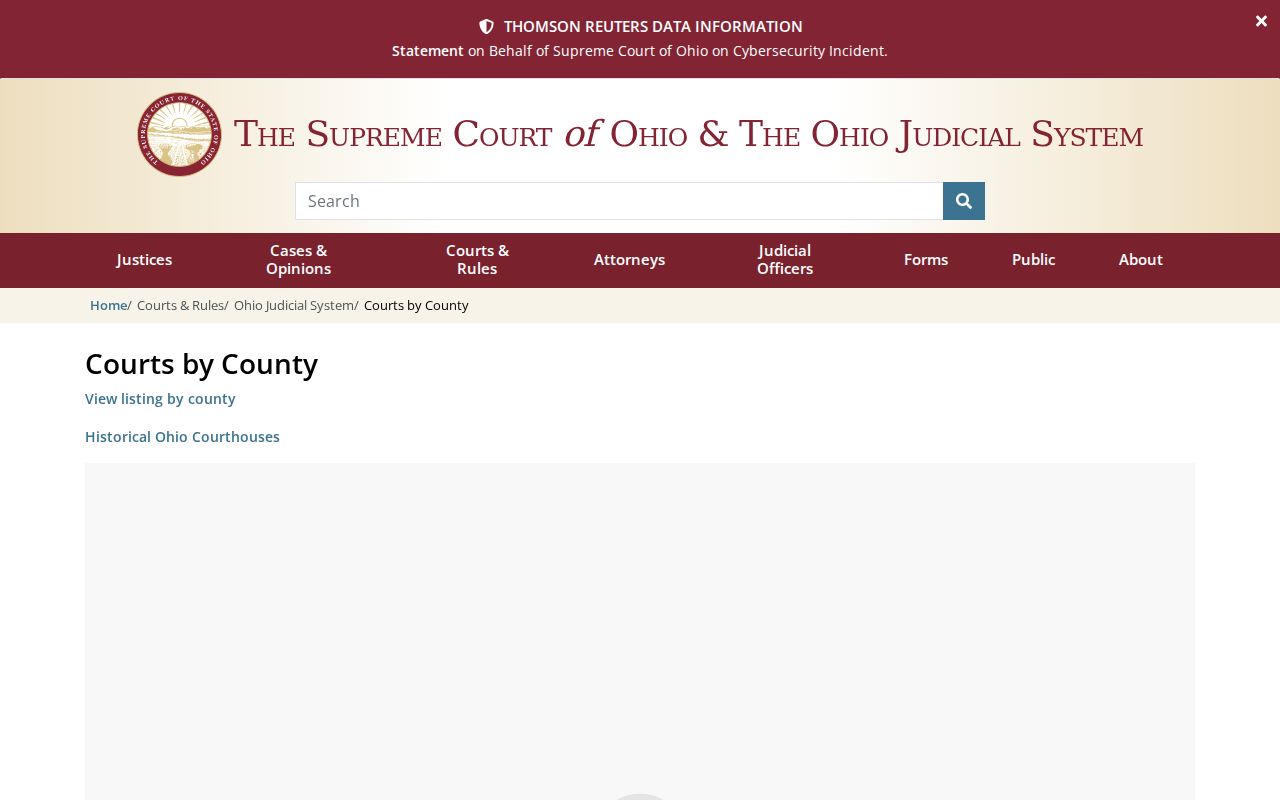
Use the directory to find the Ohio clerk that owns the docket, then confirm local hours, copy options, and access rules.
Search Ohio's Supreme Court Docket
The Supreme Court of Ohio Public Docket listed in the coverage table covers that court’s cases, not every Ohio trial filing. Its JavaScript route has no stable, exact form inventory in the cited public materials. Treat the table as fields to recheck live, not a promise that each control remains.
For an Ohio resident lookup prompted by an appeal, use this docket only when the clue points to a Supreme Court case; trial filings remain with local courts.
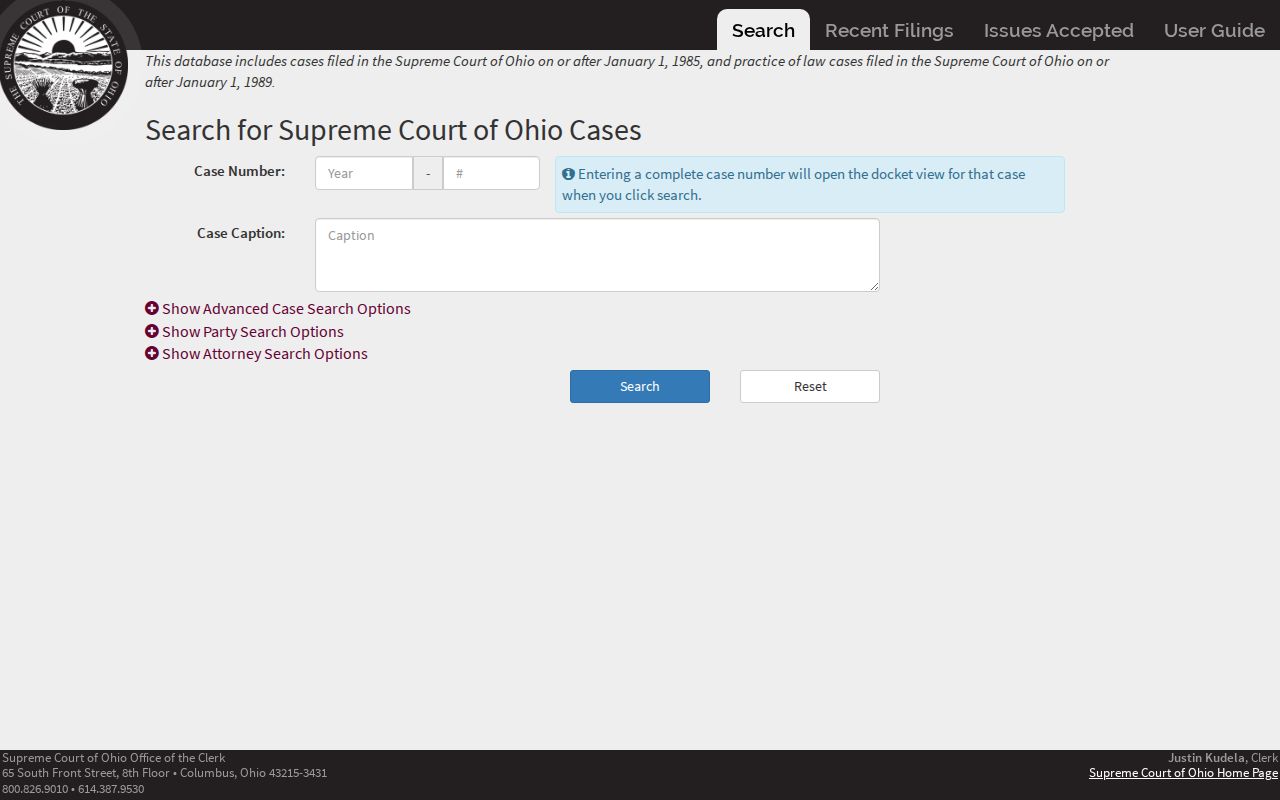
The displayed Ohio docket view is limited to Supreme Court cases, so a trial matter still routes to the county clerk. These search labels and result concepts need a live check before use:
| Control or result | Type | Required | What to verify |
|---|---|---|---|
| Case number | Text | Optional | Best Ohio case identifier when known; preserve punctuation. |
| Party name | Text | Optional | Check spelling and party role in the current interface. |
| Attorney or firm | Text | Optional | Confirm the live label. |
| Case status or date | Dropdown or date filter | Optional | Available values and date range were not confirmed. |
| Search or clear | Button | Not applicable | Exact button text needs live capture. |
| Docket result | Result link | Not applicable | May lead to an Ohio case number, caption, activity, filings, or disposition. |
Confirm an Ohio Court Match
An Ohio name match does not prove identity. Ohio indexes may omit middle names, reverse name order, or carry spelling changes; suffixes and parent-child names can mislead. Compare county, court, date, party role, co-parties, and docket event. For an Ohio parcel, keep the Auditor’s tax record distinct from the Recorder’s deed and occupancy.
- Write down the full name, known variants, likely Ohio county, and the time period or event that matters.
- Use the trial-court directory to choose the likely Ohio court, then search the local portal or public terminal.
- Compare the party role, case type, filing date, court, attorney, and co-parties before treating a result as a match.
- Open the docket entry and note the case number, event dates, disposition, and document links that are actually shown.
- Ask the clerk for an index search or copy when a local portal omits older entries or needed documents; check the appellate docket by case number if relevant.
Ohio result screens vary. Capture these fields when a local portal displays them:
| Docket field | What it tells you |
|---|---|
| Court and division | Which Ohio court owns the case. |
| Case number and caption | The Ohio court identifier and named parties or estate. |
| Party role | Whether an Ohio name appears as plaintiff, defendant, appellant, petitioner, or another role. |
| Filing and event dates | When the Ohio case began and when later docket activity occurred. |
| Case type, judge, and attorney | Context where the local system displays it. |
| Disposition and document link | Ohio case status and whether an image is online, restricted, or unavailable. |
- Docket
- A dated log of filings and court actions in a case.
- Index and image
- An index helps locate a record; the image or file contains the underlying document when the court makes it available.
- Certified copy
- A copy issued with the clerk’s certification for a use that requires an official copy.
Ohio Vital Records Have Separate Keepers
Birth and death records route through the Ohio Department of Health and local registrars. Ordering a certificate takes a signed application and the current fee; check ODH Vital Statistics before sending one. The inspected Ohio issuance statute does not create one blanket closure period for both record types. Adoption, original, corrected, or replaced records and medical-only birth data have specific protections. A decedent’s Social Security number is generally withheld for five years unless an authorized requester qualifies.
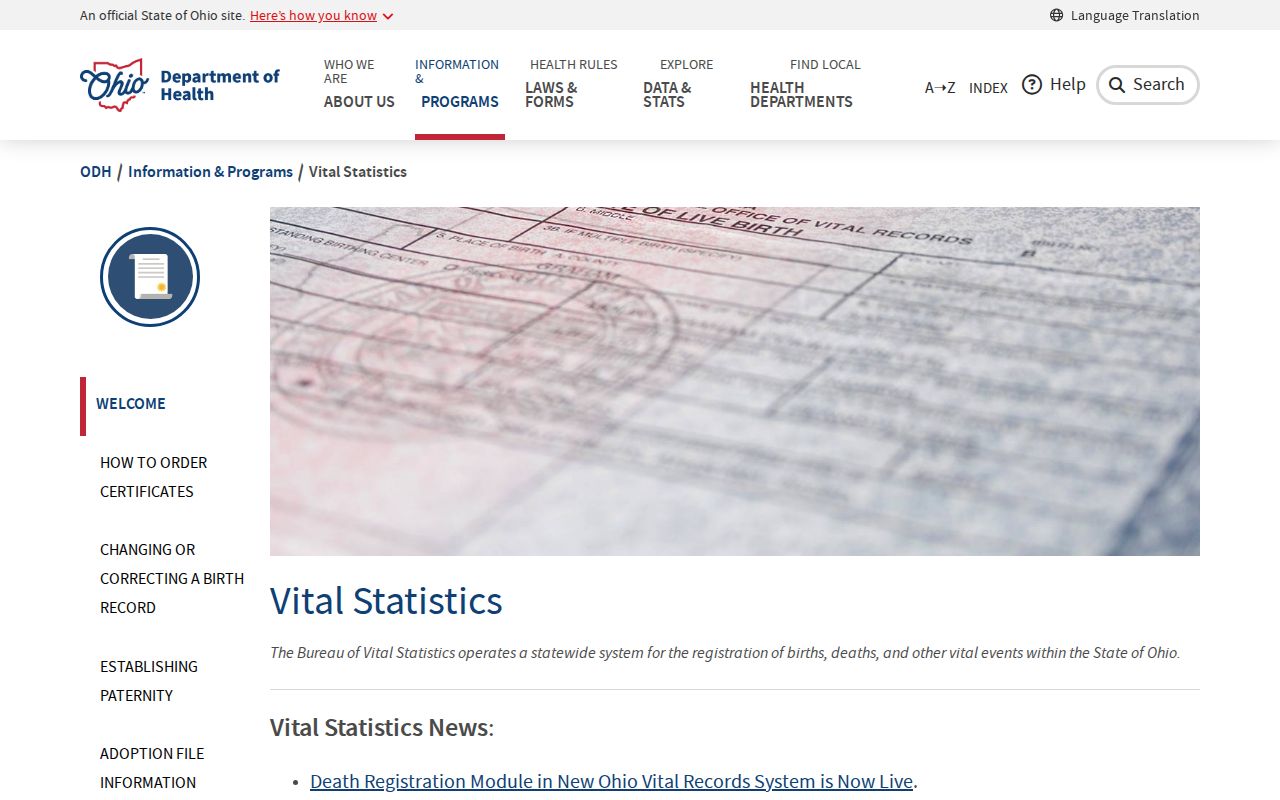
Use the Ohio ODH route for birth and death administration, then check whether the local registrar can accept the application or provide the needed record.
Marriage records stay with the Ohio Probate Court where the license issued; no statewide marriage search appears in the located official sources. Divorce files belong to the court that granted the case. Probate also holds estates, wills, guardianships, name changes, and some historical records, with county-specific search and copy rules.
For an Ohio resident lookup prompted by a life event, keep the birth or death certificate route separate from Probate’s marriage and estate records.
Ohio Heir Research Joins the Records
Ohio heir work joins a county Probate index, will, inventory, fiduciary appointment, land-sale entry, or notice with other dated records. A deed can connect an estate to land; an obituary or cemetery notice may supply family names and dates. Vital certificates can add identity evidence when the requester is eligible and the record can be issued.
For an older Ohio household, pair probate with a directory, newspaper, church or cemetery record, and census entry. The Ohio city directory collections page covers those volumes. The Ohio History Connection State Archives and local libraries hold some historical materials, but not a current certified county record.
Ohio License Records Show Public Roles
The Ohio eLicense lookup can show a professional license by name or number, including type and status and, where exposed, discipline or verification details. Formal verification differs from the public lookup and may require an account. Fields vary by profession and interface, so use the displayed values.
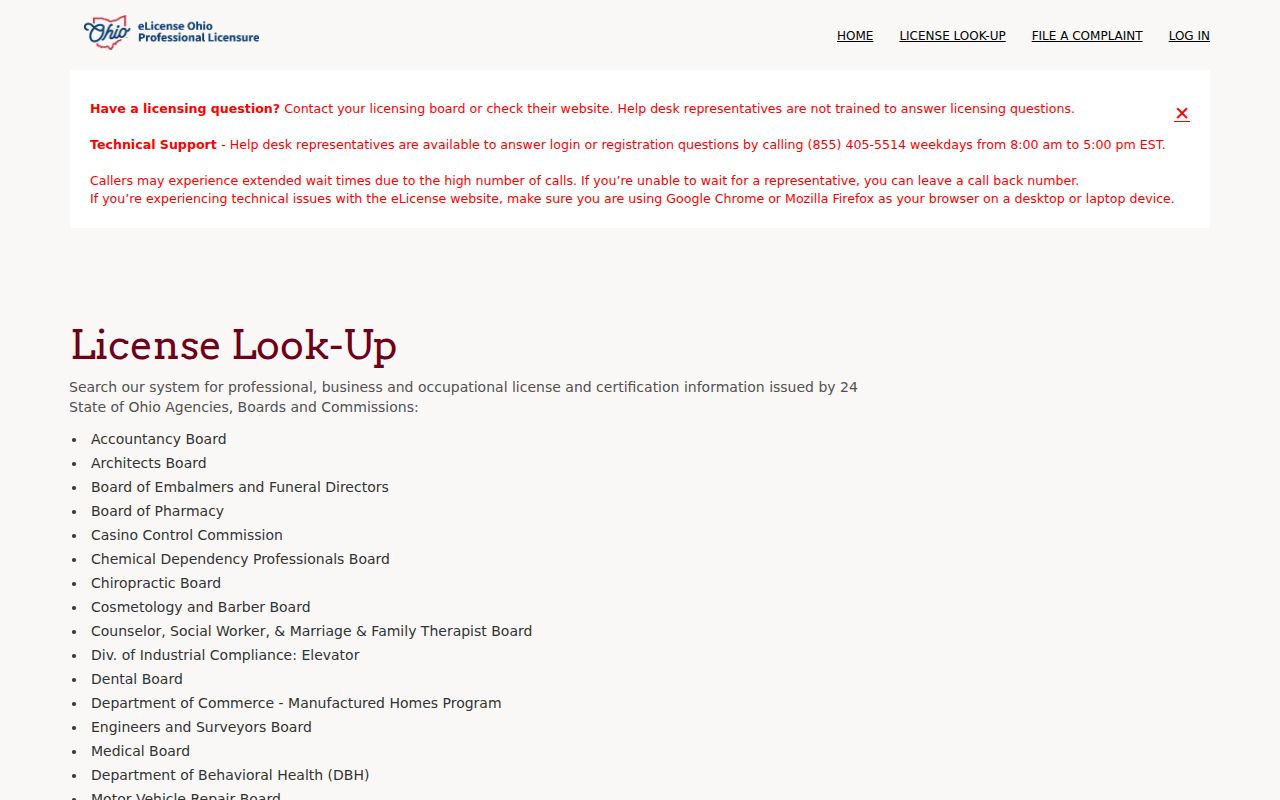
An Ohio license is a public role record, not proof of a home address.
Ohio Offender Records Have Clear Limits
The Ohio Department of Rehabilitation and Correction Offender Search covers state-prison identity, status, and institution details. It is not a county jail roster or a complete criminal-history search. Ohio county sheriffs maintain separate local rosters, with their own fields and update timing.
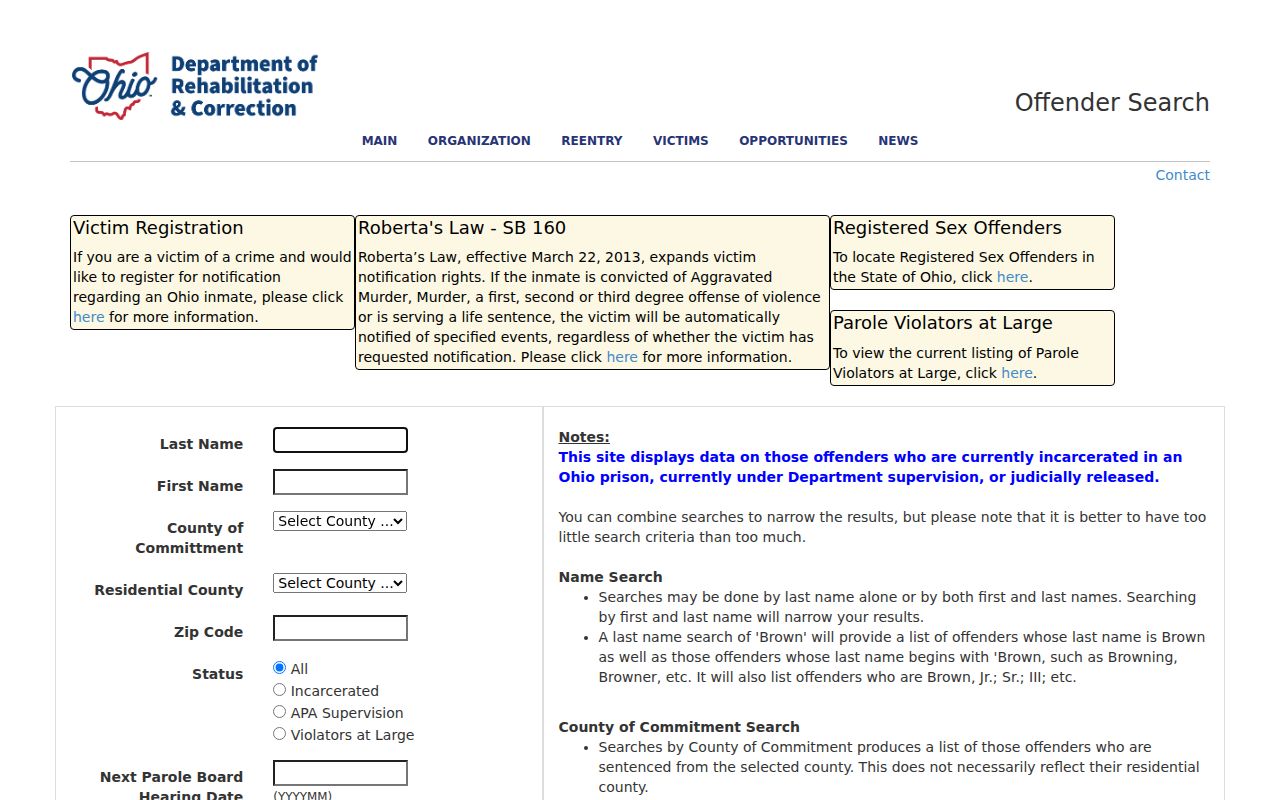
For an Ohio county booking question, check that sheriff’s roster or records unit, then verify any case outcome with the court.
Ohio Resident Lookup Privacy Boundaries
Ohio’s Public Records Act, ORC §149.43, allows access subject to exceptions and redactions. Under §149.45, a qualifying public-service worker’s residential address may be protected. Ohio voter records exclude Social Security and driver-ID numbers, phone, email, confidential voter records, and protected addresses under §3503.13.
Safe at Home is Ohio’s Secretary of State address-confidentiality program for qualifying participants. It gives a substitute address and mail forwarding, not a general lookup or opt-out. The cited official sources do not establish a broad Ohio private data-broker deletion right. Adoption, medical, juvenile, and sealed records also have separate limits. Treat a redacted field as a privacy boundary.
An Ohio resident lookup may return less when fields are protected; a blank or redacted entry is a limit, not a basis for inferring hidden details.
Lawful personal use. Keep an Ohio resident lookup tied to a lawful personal, family-history, estate, or civic question. Do not use a result to stalk, threaten, harass, or publish a protected address, and respect a clear request for no contact.
Request Ohio Records After a Portal Miss
When an Ohio portal lacks an older year, image, or local case type, identify the custodian and name the record series, date range, person or address, format, and delivery method. ORC §149.43, cited in the privacy section, permits an oral request; a written one helps preserve the scope. A requester generally need not state a purpose. If the request is too broad, the office should explain how to revise it.
Ask for an estimate before a large copy request. An Ohio office may charge actual copy and delivery costs and require advance payment. The inspected statute sets no single response deadline; access must be prompt for the request and office. If denied or redacted, ask for the legal basis and any releasable part. The Ohio Attorney General Sunshine Laws Manual covers the process.
Other Ohio channels include a clerk’s counter or terminal, Board of Elections, ODH or local registrar, Probate Court, library, and archive. Ask the custodian about local coverage and copy rules. For a portal miss, check name variants and jurisdiction, then request a specific record rather than a general list of people.